Honouring Trauma-informed Approaches to Archiving
Community archives like the Jewish Public Library Archives (JPL-A) capture what it has meant to live as a Jewish person in Montreal from the Great Migration until today. These histories are told through personal papers, objects, home videos, photographs, newspapers and so much more. Given that these legacies often contain hardship, exile, or assimilation, the archives are rife with traumatic materials. Viewing a photograph that depicts a concentration camp, or a minstrel show, or a piece of correspondence that expresses sexism in the first person: these instances can feel so intimate and personal, they can open wounds we thought were closed or trigger feelings we did not know we possessed. These traumatic encounters can occur for researchers who stumble upon material, or did not expect the severity of the material they requested. The same trauma can occur for the archivist whose job it is to procure the material, to take those difficult records and keep them close, to analyse them and describe them in our catalogue, and to decide where they belong in our information structures.
A trauma-informed approach to archiving was developed by Nicola Laurent and Kirsten Wright from the University of Melbourne. The concept of trauma-informed practices began in the mental health field and has now been adapted by the information and memory sector. Laurent and Wright, in their paper “Safety, Collaboration, and Empowerment: Trauma-Informed Archival Practice,” outline a hands-on approach to envisioning and implementing a people-centered and trauma-informed archive. Laurent and Wright identify five key areas: safety, trust and transparency, choice, collaboration, and empowerment.
Below is a behind-the-scenes look at how we address two major tenets of this methodology at the JPL Archives – safety and transparency.
Safety
Safety as described by Laurent and Wright, is a necessity to fight against the lack of agency of some of those represented in the archives. In the JPL-A’s case, for example, those individuals documented in Jewish internment camps in Canada in the 1940s may not have had the option to deny consent of having their photos taken. In other cases, the language used to describe groups of people may be derogatory and reproducing that language continues to disrespect members of those groups today. Safety can mean creating a space where these histories are acknowledged and the harm that can occur to researchers and archivists who view or describe this material is taken into account.
Laurent and Wright recommend the following approaches:
“Provide notices in catalogues, finding aids, and guides to inform people that the contents of particular records series or groups may be offensive or cause distress so that people are aware of cultural safety issues.”
One strategy employed is to have the content warning be impossible to miss; it is positioned as one of the first items the user comes across when examining the record. Appearing as close to the top of the record as possible, near the title, it ensures that the user will note it immediately.
Below (Fig. 1) is an example of how content warnings may appear at the JPL-A. A comprehensive content warning appears within the body of the description. Content warnings are not an official part of the description standard (RAD) that is used by most archivists in Canada, therefore archivists have to rework existing content fields. In this case, the notes field is used and it can be found lower on the page.
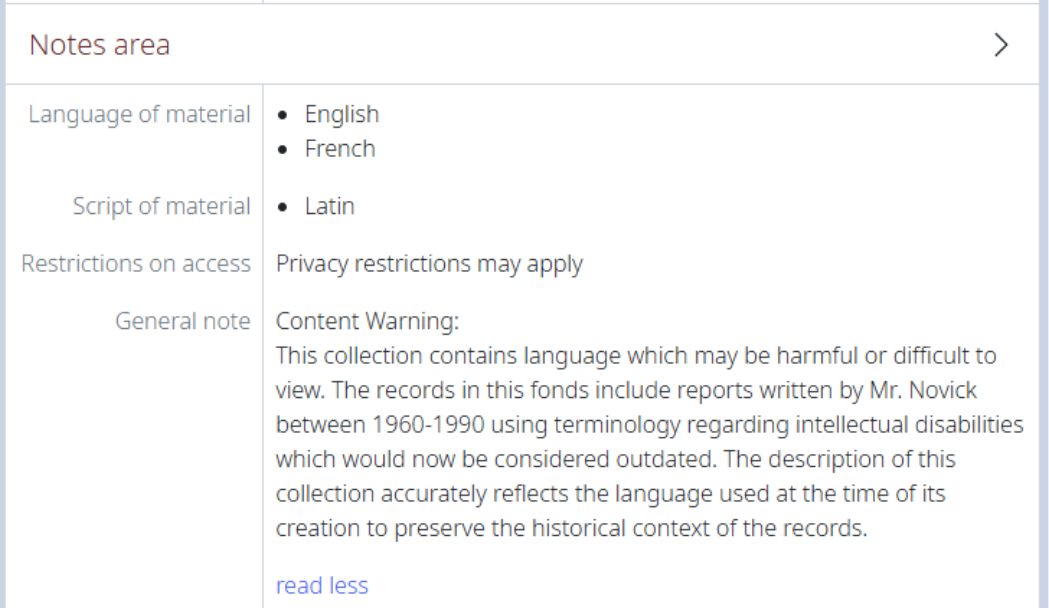
Fig. 1. Comprehensive content warning as a General Note
“Consider how records are described and the language used, ensuring that descriptions do not uncritically reproduce the language of the records.”
Regardless of the severity,it is important to note when inaccurate and potentially harmful language is used if the goal is that everyone’s humanity be respected. In Fig. 2., a figure in a photograph is described as “Frisky.” The misogyny present in this description was noted and we changed the term in the item’s title from “frisky lady” to “woman.” The previous title was captured in the “Parallel title” field ensuring that the JPL-A retains transparency of past descriptions, in the case where historic terminology is still used as a search term by some, keeping it in the “Parallel title” field ensures that both the original title and the new title are searchable.
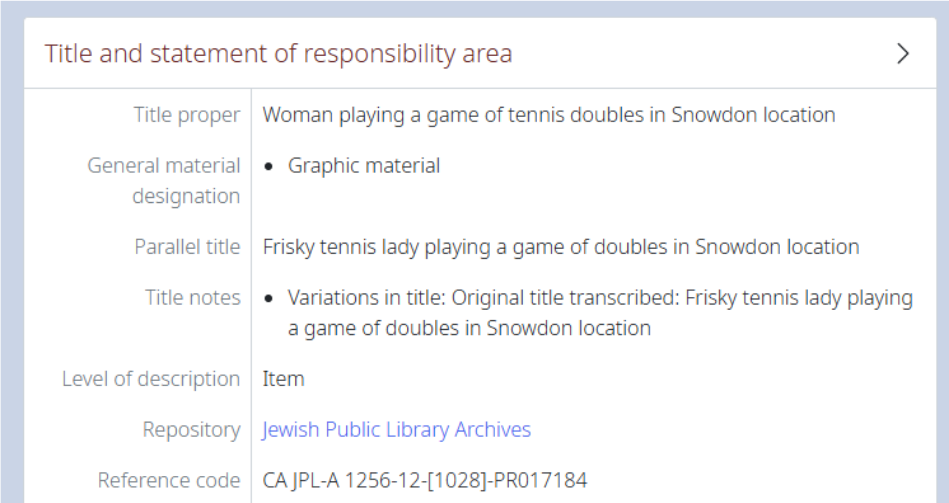
Fig. 2. Parallel Titles offer a field to document historic terminology.
***
Transparency
Transparency is a vital way to build trust with our users and donors. Laurent and Wright describe transparency as:
“Acknowledg[ing] past wrongs, and [openness] about the work that is happening now to redress these (even if the work itself is happening behind the scenes).”
At the JPL-A, in some instances, we try to provide information that goes beyond a simple content warning. In the example of Fig. 3., a collection of photographs and textual records depicting a series of minstrel shows, our archivists augment the content warning with resources and information on the history of minstrelsy.
It’s also an example of how Wright and Laurent’s writings are part of an active conversation in the information field. This content warning was inspired by a plenary talk in 2021 by Dr. Cheryl Thompson entitled, "Black Archives Matter." The JPL’s current and past directors of archives, Maya Pasternak and Shannon Hodge, respectively, were in attendance. The talk moved them to action.
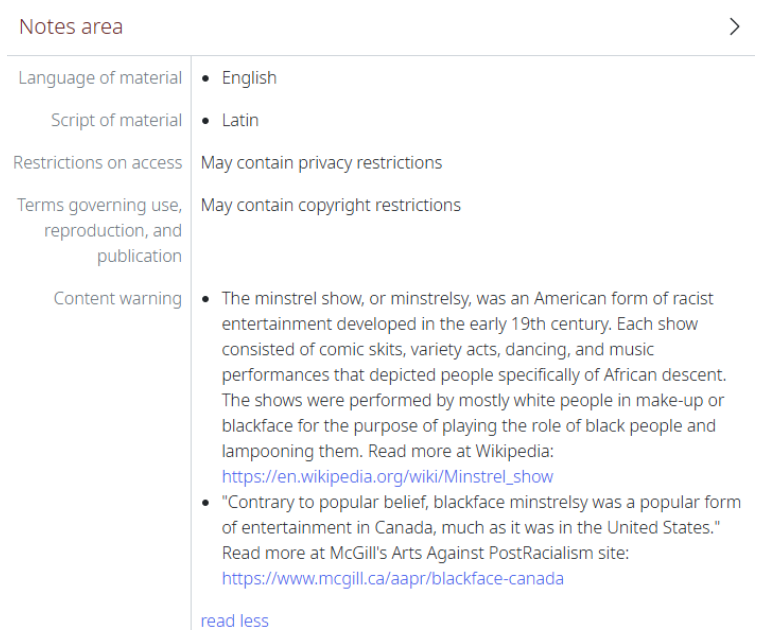
Fig. 3. A content warning on minstrel shows in the Content Warning field in the Notes area
In Fig. 4, you’ll find another way that the JPL-A aims to remain accountable to archival users through transparent description. Each description in our digital repository contains a “Date of creation note” which states when the description was written and by whom. This note demonstrates that each description is subjective by identifying an author. The “Date of creation note” field is also searchable, meaning the user is able to see all descriptions created by, for example, the author.
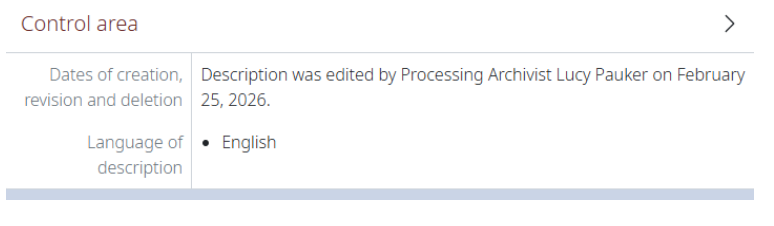
Fig. 4. The Control Area of an archival description
As a codified practice, trauma-informed archiving is relatively new and constantly in flux, therefore trauma-informed archivists must persevere. We must create new and novel content fields and manipulate pre-existing content fields in ways they weren’t meant to be manipulated. Like all archival work, describing records with the intention of harm reduction and empowerment is slow and methodical, but the results are rewarding. In this upside down trauma-ridden world we live in, it’s so nice to think that maybe today my work acted as a hand that held yours through the screen as you navigated through a difficult chapter in history.